Week 8 Reflection
I am looking forward to each POD presentation at the end of this class, I found it really interesting listening to the brief overviews of all group’s ideas. I am looking forward to POD #6’s presentation about trauma-informed teaching practices. Its something I don’t know much about and think its such an important topic. I like sharing learning with the class, because there are always topics that I am unfamiliar with. This is such a positive for inquiry based learning, and sharing those inquiries: everyone will learn something new by the end of class. I also like the model of sharing the videos/resources a week before so everyone has time to take in and reflect on the information before each group talks more in depth about it.
This seems like a great resource for school districts to use regarding trauma-informed teaching practices. I think it is really important to receive training on these practices, and learn how to create safe environments for all students. I wonder if POD #6 will talk about this training?
EdTech Integration Models
I enjoyed taking a deeper look into these integration models, and really appreciated Randy’s overview. It made the breakout rooms more efficient and our conversations more impactful. I also liked the Padlet – I have never used Padlet before and found it to be a really fun, easy piece of tech. The way it displayed the questions and all the comments was very engaging and user friendly. I think it would be an easy tool to incorporate into an intermediate classroom with a specific inquiry or leading question, and get the students to add their opinions.
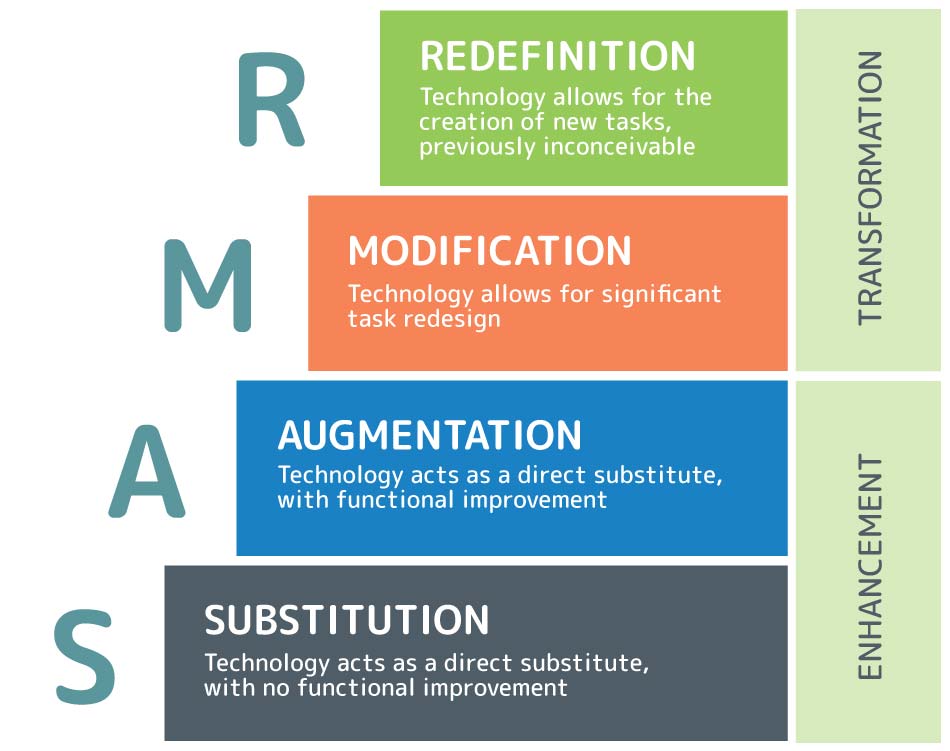
Specifically, I liked the SAMR model. This graphic from https://www.3plearning.com/blog/connectingsamrmodel/ shows substitution on the bottom and redefinition on top, which helps visualize the building block nature of it. My favourite thing about this model is how clearly scaffolding is built into the model. It naturally progresses in a way that the teacher can implement without much extra tweaking. Also, students can follow this model (and probably already do) without much instruction. I also like how you can choose which parts your want to use at what times, depending on the class, project, and individual needs of each situation.
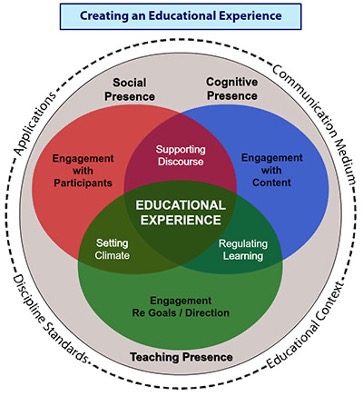
I also liked the Community of Inquiry framework (from https://ctl.jhsph.edu/blog/posts/Importance-of-COI/) in relation to this course. I think it was interesting hearing Randy break down the different things he is doing to make this online class an even better and more well rounded learning experience than one in a physical classroom. Before I took this online class I was skeptical at how it could be similar at all, but am pleasantly surprised at how engaging the material and conversation is. I think this is widely due to the successful implementation of models like the COI framework.
Overall I enjoy learning about these models because it makes technology and online learning more manageable in my mind. If there is a framework I can follow to help ensure the success of my students when delivering online material, or any material, I think my chances of satisfaction are much higher.
Astrid, thanks for a good overview of the four models and how you might apply them in your teaching. As you note, the COI is one of the more detailed models, and like design templates, it helps guide us in planning instruction that engages students through technological choice. SAMR is a useful way to think about how to apply the tech you are choosing to use. Thanks for sharing!