Week 2 Reflection – Our visit to PSII
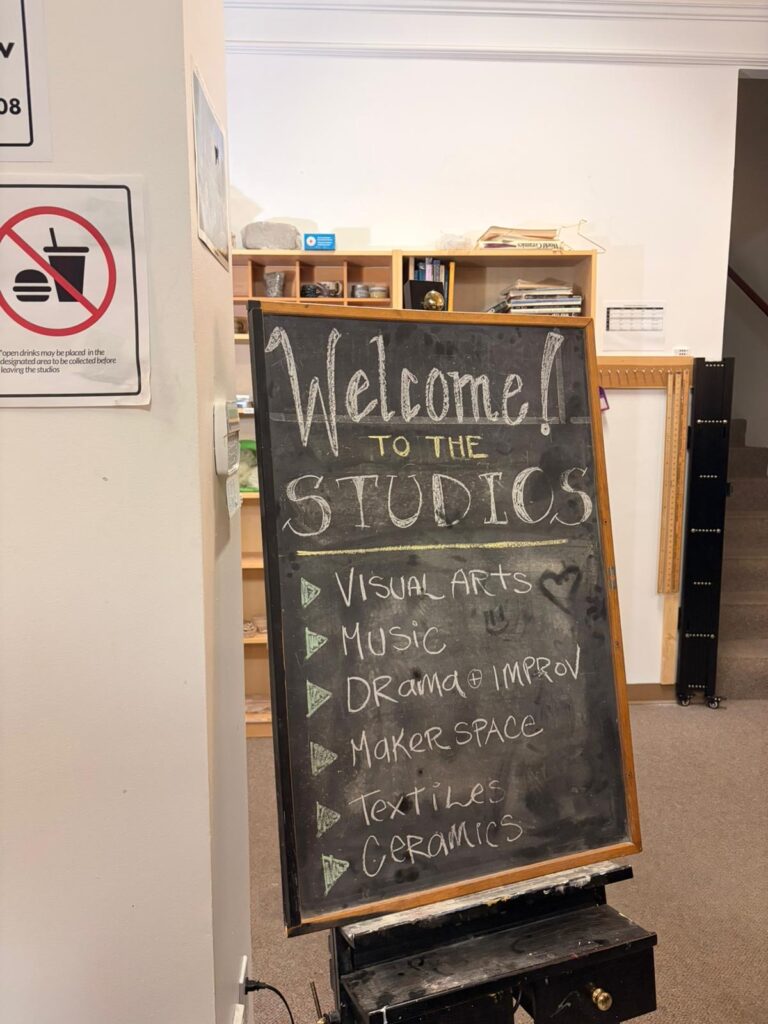
What an amazing experience. I think we all felt like it was the teaching promise land and we had found a positive solution to increase student motivation and engagement. The environment was welcoming, cozy, and conducive to learning. The students looked like they were enjoying their time, and the teachers I talked to were all extremely happy to be part of the PSII team. I loved how many different avenues there was available for students to embark on their inquiries. When I first heard about PSII, I thought it was all about computer tech. I don’t know why I thought this, but I was pleasantly surprised during the tour when we saw the music rooms, pottery wheels, looms, photography areas, dark room, etc. Not only was there ample amounts of science, math, and computer areas available, but also many artistic and hands-on avenues for students to explore. I loved this model, because it allowed for all interests to be celebrated and encouraged as equal. Jeff was a fantastic tour guide, and I found him very interesting and engaging. It was great hearing from someone who used to work in the public school system explain a new model of learning.
Do we need to reimagine education?
The only two experiences I have in a high school setting (not including my own time in high school) have been at Belmont Secondary for one day last semester, and the visit to PSII on Friday. These two schools had a completely different feeling, and the students I observed in both settings were behaving in a different way. Of course, it’s impossible to say the exact reasons for this or if it is even true with such short exposure to both programs. But, from the conversations I did have in both places with staff and students, one school seemed like it was engaging students more effectively. Belmont was a massive school with very full classes. In the classrooms I was observing, students were overall checked out, disinterested, and down. At PSII, the students were actively working on things that they found interesting. It was less rigid and strict, allowing students to have the autonomy within boundaries that they crave. I have heard many times that the regular public school system doesn’t work for a lot of students. For a plethora of reasons, the majority of learners seem to lose their motivation by secondary and high school when going through the public school system. I think for this reason, and the many other negative effects on student mental health and well-being, that education does need to be reimagined. I appreciate learning about all alternative methods of education, because its definitely not a ‘one size fits all’ type of thing. Inquiry-based education and outdoor learning are two alternative methods that I am interested in.
Roadblocks?
Although this method is exciting, I couldn’t help but think of some roadblocks as we were touring the school. Being a private school, the financial requirements already put some students who would benefit from this model at a disadvantage. It isn’t as outrageously expensive as some other private schools in Victoria (SMU, GNS), but still has a pretty hefty tuition that could result in the program being inaccessible to some. Jeff explained that he dislikes being a private school, but it was a ‘necessary evil’ in terms of being able to successfully use the inquiry-based model effectively. That being said, implementing this method into a public elementary school would also come with challenges. Trying to find the financial support for all the equipment, professionals, and learning that students have access to at PSII would be difficult. Also, the class sizes and adult to student ratio are much larger in a public school system. The inquiry-based model is successful in part due to the small class sizes, and the time the teachers are able to spend with each student.
What obstacles do educators often face when they try to change pedagogy?
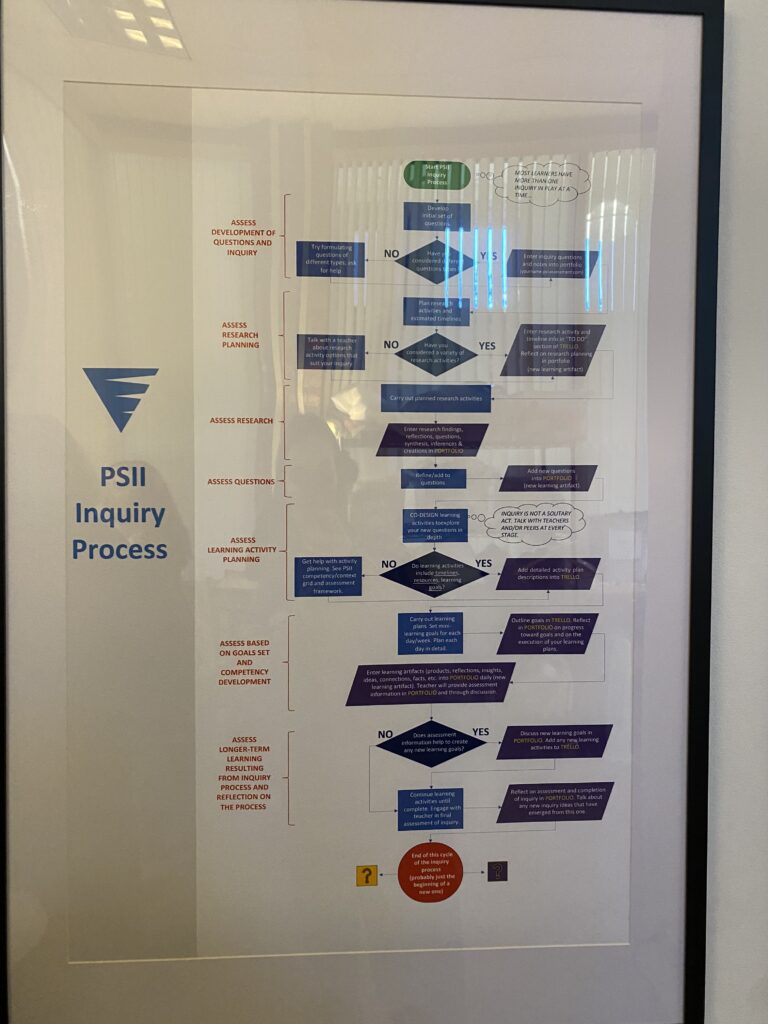
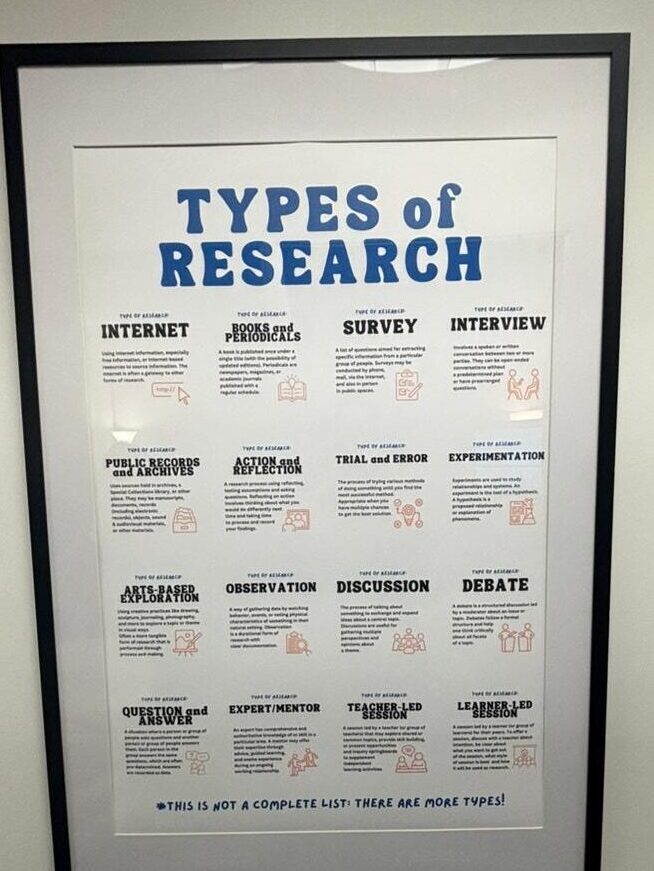
Pedagogy seems like a difficult thing to change, especially as a new teacher coming in to an established school setting. I liked hearing Jeff’s story, about being a Superintendent in the public school system and then moving to private; his experience makes him a very credible source to talk to about student success and happiness. It sounded extremely difficult to change the public school system, even from a position as powerful in the education hierarchy as the Superintendent. Some of the main obstacles seem to be funding, time, resources, strict curriculum, and co-workers that are resistant to change. It seems like changing pedagogy would not be easy to do on your own, and even less so if someone is against change. This makes me nervous as a new teacher, because I don’t know what my preferred pedagogy is yet – my classmates and I often wonder if it would be possible for one classroom to be taught a specific way, even if that is not the established way of the school. For example, my classroom becoming an outdoor and land-based learning classroom, or an inquiry-based learning classroom, while the rest of the school sticks to the classic public school method. I don’t know if this is possible, but I do appreciate how many resources are available online from alternative schools and educators that can be implemented into a classroom. This assessment resource that PSII uses was shared by Jeff at the tour, and here is a PDF of their inquiry process. Both of these resources or parts of them could be used in any classroom for someone who is interested in the process.